Accessibility has to start before the book is finished
Media Transformation Summit: Agata Mrva-Montoya and Laura Brady
At the heart of Agata Mrva-Montoya and Laura Brady’s Media Transformation Summit discussion was a simple idea: accessibility has to be built into publishing from the start.

Published: | Photo: AI generated, Magnific
What if weak book sales do not mean there are too few readers, but that price, distribution, language or format are keeping those readers away?
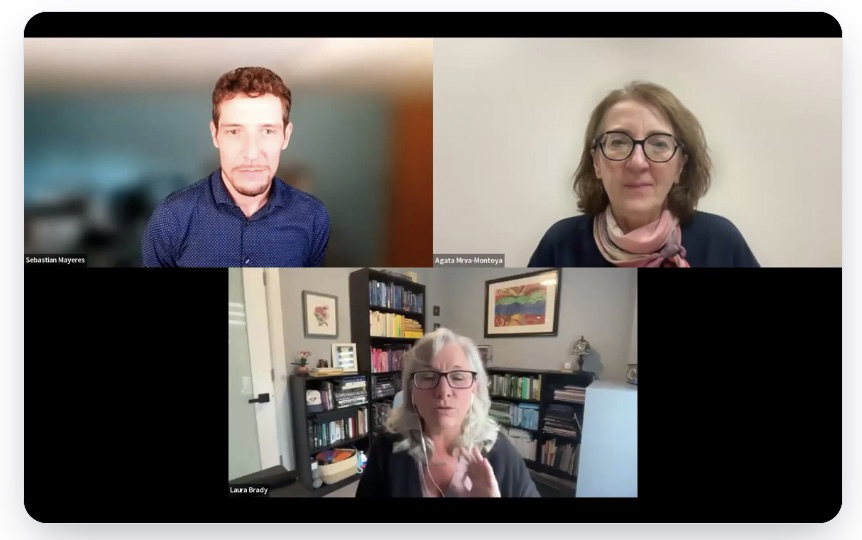
A book can pass an accessibility checker and still be difficult — or impossible — for someone to use. That gap between technical compliance and the reader’s actual experience framed Compliance Isn't Accessibility: Why Culture, Not Technology, Is the Real Barrier, one of the sessions at the fourth Media Transformation Summit, organized by Publishing Signal and powered by knk.
Dr Agata Mrva-Montoya, Senior Lecturer in Media and Communications at the University of Sydney, and Laura Brady, an accessible publishing expert and independent consultant, approached accessibility from different sides of the publishing process. Both, however, reached the same conclusion: if accessibility only enters the workflow once a book is finished, publishers are already starting too late.
Brady began with the limits of automated checking. ACE by DAISY can identify technical problems in an EPUB, but even its creators estimate that it covers only part of what accessibility requires.
“Thirty percent, that's it,” Brady emphasized. “There's another 70% that needs to be done by human in the loop.” A checker might confirm colour contrast, for example, but it cannot determine whether an image description is genuinely useful to the reader. “I have seen automated checkers check books that are absolutely awful on all kinds of accessibility metrics, but it passes because it's not violating any of the rules.”
For Mrva-Montoya, that is why accessibility needs to move much earlier in the publishing process. Choices about images, structure and formatting should already take different readers into account instead of being corrected at the end.
“If we start at the very early beginning, then accessibility sort of happens almost just naturally,” she explained, comparing it to designing a building: it is far easier to make something accessible from the start than to retrofit it later. “We need to think about publishing in multiple formats from the beginning and multiple audience.”
Accessibility as part of the workflow
Brady described the cultural shift required as “360 degree accessibility”: accessibility should be considered across acquisition, editorial, production, marketing and distribution rather than assigned to a final technical stage.
“Accessibility is part of everyone's job,” she argued. “True inclusivity is nuanced and broad and is a culture that is built throughout a publishing house.”
That does not mean responsibility should become vague. Mrva-Montoya stressed that publishers may initially need a dedicated person or team to build expertise and embed accessibility into contracts, style guides and workflows. Eventually, she argued, those practices should become part of the company’s basic infrastructure.
“It should be at the core of the publishing house,” she noted. “It should be part of the infrastructure, it should be part of the DNA.”
Brady offered a more playful metaphor: “whack-a-mole accessibility.” Someone still needs to keep asking, Have we thought about accessibility here? until that question becomes habitual. “It's not a one and done effort,” she stressed. “It's continuous and it's a culture.”
Earlier can also mean cheaper
Building accessibility into the workflow can also reduce duplicated work and cost. Brady gave the example of children’s publishing, where early instructions created for illustrators can later form the basis for image descriptions rather than forcing production teams to reconstruct that information from scratch.
Mrva-Montoya described a similar approach at Sydney University Press, where authors were asked through their contracts to provide alt text with their manuscripts so that it travelled through the editorial and production process with the book.
The cost of doing the opposite can be significant. Mrva-Montoya cited a UNICEF example in which remediating a textbook after publication cost around $50,000 and took between six and nine months. “It's so much more expensive to try to retrofit and convert this textbook afterwards,” she observed.
For Brady, the argument for accessibility therefore goes well beyond compliance. Regulation matters, but so do ethics and business. “There is an ethical responsibility,” she emphasized. “Not paying attention to accessibility is a major failure.” She also pointed to the potential audience publishers exclude when accessibility is ignored: “Why would you leave 10 to 20% of your readership out of how you publish?”
What readers still need
Questions from the audience brought the discussion back to the reader experience. Asked about audiobooks, Brady noted that making content available in audio does not automatically make the full book accessible. Navigation, footnotes, endnotes and image descriptions can all matter.
“Print disabled readers want to hear the footnotes and the endnotes and they want the full experience,” she explained, pointing out that visual elements such as maps are still frequently omitted from audiobook editions.
The session ultimately returned to a simple principle: accessibility can require specialist standards and technical expertise, but it can also begin with better everyday decisions.
“Sometimes accessibility is deep in the weeds and deeply technical,” Brady reflected. “And sometimes it's just sort of common sense human problem solving.”
What matters, she concluded, is bringing “an inclusive human eye” to publishing from the beginning.
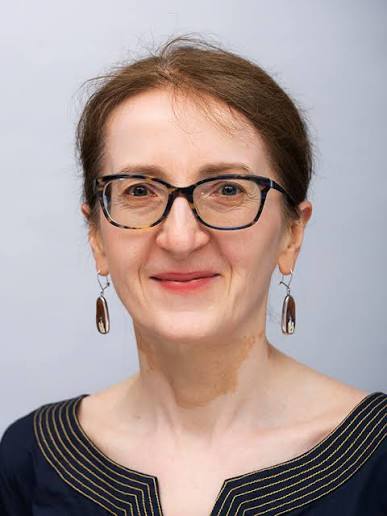
Dr Agata Mrva-Montoya: Dr Agata Mrva-Montoya is Senior Lecturer in the Discipline of Media and Communications at the University of Sydney. Previously, she worked at Sydney University Press, where she led the implementation of accessible publishing practices. Her research examines the ways technological innovation and power structures shape the publishing industry, with a particular focus on their impact on equitable access to literature and knowledge. She is the author of Inclusive Publishing and the Quest for Reading Equity (2025) and co-author of Books without Barriers: A Practical Guide to Inclusive Publishing (2026).
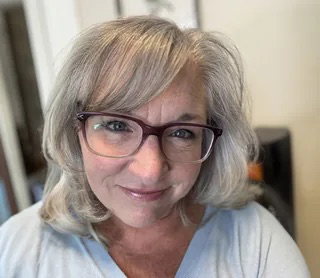
Laura Brady: Laura Brady is an accessible publishing expert who works with eBOUND Canada, the Accessible Books Consortium, the International Publishers Association and Adobe, among other organizations. She has more than 25 years of trade publishing experience and has spent the past fifteen years working in digital publishing, creating and converting ebooks, training publishers on accessible workflows, and consulting with organizations on inclusive publishing and reader experience. She teaches about ebooks, publishing and accessibility at Simon Fraser University and Toronto Metropolitan University.