If there is no page two, who gets discovered?
At the Media Transformation Summit, Narrative Muse CEO Nigel Lopez-McBean examined what changes when AI assistants become a new gatekeeper between readers and books

Published: 30.10.2026 | Photo / Video: MTS video
A bookseller can point a reader toward an unexpected title. A physical shelf leaves room to browse. Even a conventional search engine usually has another page of results. An AI assistant may offer three or five recommendations - and stop there.
That narrowing of choice was at the center of Who Gets Discovered When AI Becomes the Gatekeeper?, a session at the fourth Media Transformation Summit, organized by Publishing Signal and powered by knk. Nigel Lopez-McBean, CEO of Narrative Muse, joined knk CEO Sebastian Mayeres to discuss what happens when algorithms increasingly influence which books enter the conversation in the first place (watch the session here).
For Lopez-McBean, the question is not only whether AI can recommend books well. It is also what those systems are designed to surface, what they may overlook and how publishers can respond without simply reproducing the same patterns of visibility.
Lopez-McBean opened with a simple experiment. He had asked two AI assistants to “recommend a beautifully written novel most people haven't heard of”. Neither asked anything about him before answering, and both confidently returned older titles.
“What we're currently doing with AI discovery is, in some small way, almost becoming a very efficient way of recommending the past,” he observed. The problem was not that the books were poor recommendations, but that a few questions about the reader might have produced something more contemporary, personal or genuinely unexpected.
That distinction matters because discovery is not the same as search. Search begins with some idea of what the reader wants; discovery introduces something they might never have thought to look for. Lopez-McBean argued that recommendation systems should therefore be examined not only for how accurately they respond, but for what they are optimized to promote in the first place.
“The surprising discovery element is really the bit that's kind of fascinating and exciting to me,” he explained, adding that retailers naturally build recommendation engines around their own commercial priorities. His broader question was whether book discovery should depend on a single dominant engine or on a wider range of systems with different goals and points of view.
Describe the book the way readers do
One practical consequence is that publishers may need to pay closer attention to how readers themselves describe books after publication. Lopez-McBean suggested that every title effectively develops two descriptions: the one created by the publisher and another formed through reviews, interviews and reader conversations.
“What are the words that they use? What are the phrases that they use?” he asked. “Those words might be very distinct or slightly different from how the book is described.” Looking at that language, he argued, can help publishers understand how a title might be surfaced when readers ask AI assistants highly specific questions.
The answer, however, is not simply to produce more metadata. Lopez-McBean emphasized precision over volume. Tone, setting, characters and particular themes can matter because conversational discovery increasingly begins with requests that are much more specific than a traditional category or keyword search.
“It's not necessarily way more information,” he noted. “It's more about specific information.” That could even benefit smaller publishers, he added, because a house publishing fewer titles may know each book well enough to describe its distinct qualities with greater precision.
The danger of optimizing for the past
There are limits, however, to shaping books around what AI already knows. Lopez-McBean argued that optimization can easily become repetition, reinforcing the same historical patterns instead of opening discovery to something genuinely new.
“The danger within that is you start to self-perpetuate everything that's wrong historically,” he cautioned. What is needed, he argued, is also “new data and a new perspective” — particularly if discovery systems are to surface debut authors, contemporary books and voices that do not already benefit from years of accumulated attention.
For publishers, that means looking beyond metadata and asking harder questions of the platforms themselves. Lopez-McBean suggested two in particular: how much of a publisher's catalogue has actually been recommended in recent months, and what does the system do with books that have no sales history?
The second question is especially important for new authors. “How do you cold start a book?” he asked. A platform that relies heavily on past performance may struggle to surface something that has not yet had the opportunity to perform.
That makes discovery more than a technical or marketing concern. Lopez-McBean described content recommendation as the increasingly important “bridge between art and commerce.”
“What you think might be a marketing problem might actually be something that's more structural,” he emphasized.
A creative challenge, not only a technical one
Despite the focus on algorithms, Lopez-McBean resisted treating discovery as something that should be handed entirely to technology teams.
“Discovery and recommendation are really a creative challenge,” he argued. “People who are creatively minded and really care about the work should be involved in it.” For him, the same attention that goes into acquiring, editing and publishing a book should extend to understanding how that book is represented once it enters recommendation systems.
His final advice returned to something much simpler than gaming an algorithm: understand what makes the book distinctive and make that specificity visible. “Every title is unique,” Lopez-McBean reflected. “It's really beginning to get the readers to understand that as well.”
In a discovery environment where there may be no page two, that clarity may determine which books enter the conversation at all.
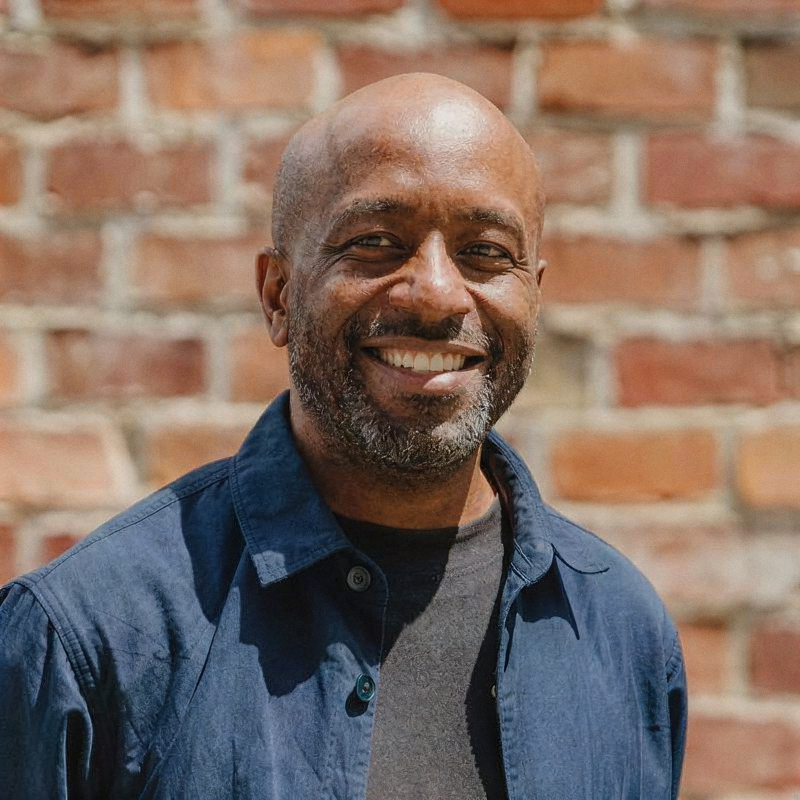
Nigel Lopez-McBean is CEO of Narrative Muse, an independent content discovery and audience intelligence platform. He began his career selling books at Waterstones before moving into media and production, where his work earned an Emmy nomination and a Sundance selection. His paper, “Seen or unseen: how recommendation systems became the gatekeepers of cultural access,” has been accepted for peer-reviewed publication through UNESCO’s International Research Centre for AI (IRCAI). Nigel is based in Sydney.